

How Lightweight Onboarding Outperforms Complex Adoption Platforms
Complex adoption suites promise everything, but often deliver slow implementation, scattered ownership, and unclear ROI. Lightweight onboarding tools focused on activation help teams ship guidance faster, reduce time-to-value, and measure impact without turning onboarding into a six-month program.
 Lucas G.Onboarding Consultant
Modern B2B SaaS teams are under pressure to improve activation and retention without adding months of implementation work. That’s where onboarding decisions get messy: enterprise “digital adoption platforms” promise end-to-end adoption, analytics, segmentation, and orchestration—but they also introduce complexity, cost, and a new layer of operational overhead.
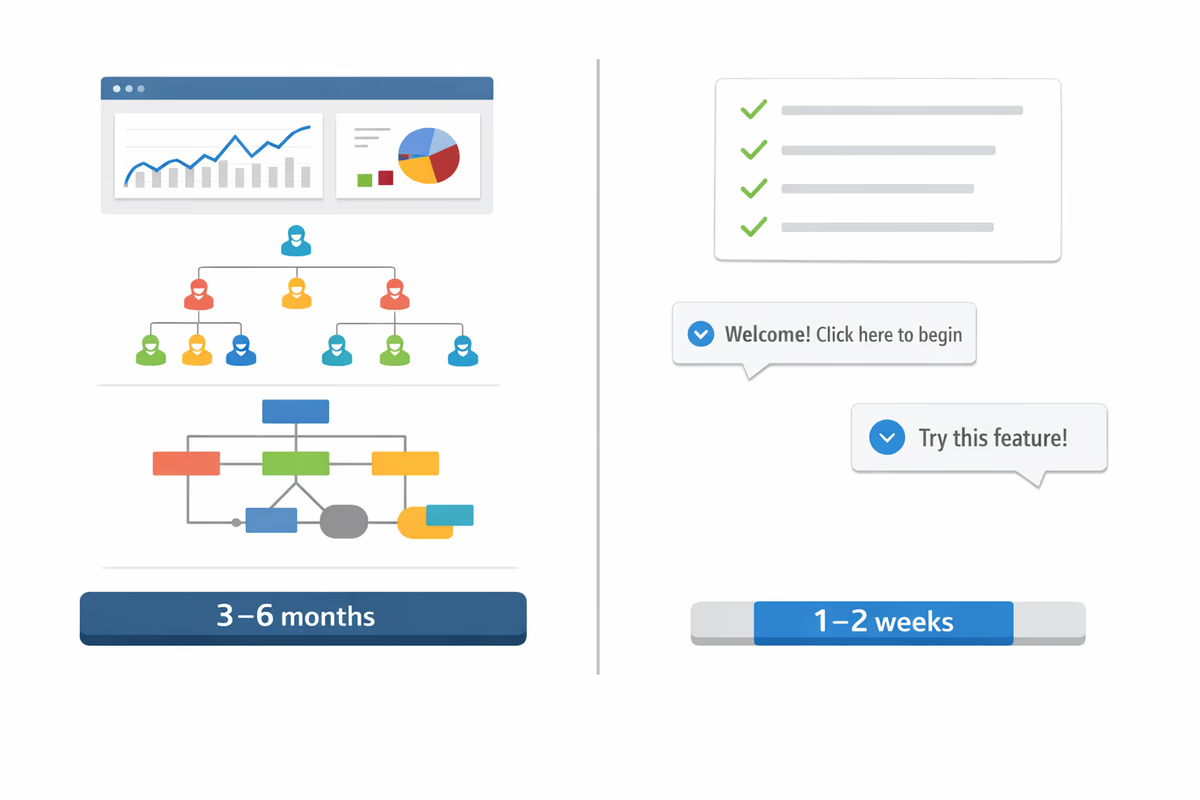
Lightweight onboarding wins in many B2B SaaS contexts because it does one job exceptionally well: it helps users reach the first meaningful outcome faster, with guidance you can ship quickly and measure cleanly.
Below is a practical breakdown of why simplicity often outperforms complexity, when a heavier platform makes sense, and how to roll out lightweight onboarding in a way that produces measurable ROI.
What “lightweight onboarding” actually means
Lightweight onboarding isn’t “less onboarding.” It’s onboarding designed around activation, not platform sprawl.
A lightweight onboarding approach typically includes:
- Fast-to-build in-app guidance (tooltips, checklists, modals, hotspots)
- A small set of activation events you track and optimize
- Minimal dependencies (no multi-team, multi-quarter implementation)
- Clear ownership (usually Product Growth, Product Ops, or CS Ops)
- A tight feedback loop (ship → measure → iterate)
The goal is to reduce time-to-value and increase the percentage of users who reach your activation milestone.
Why complex adoption platforms often slow teams down
Complex adoption suites can be powerful, but they often create friction in the exact place you need speed.
1) Implementation becomes the project (instead of activation)
Enterprise adoption platforms frequently require:
- Deep event instrumentation plans
- Extensive role-based segmentation design
- Multiple approvals for UI patterns and brand systems
- Security reviews, SSO considerations, and data governance
- A new operating model for who publishes what, when
That’s not inherently bad—but it shifts the work from “improve onboarding this month” to “build the onboarding machine this quarter.” If your activation problem is urgent, the opportunity cost is real.
2) Ownership gets diluted
When a platform can do everything, it often becomes unclear who owns outcomes:
- Product owns onboarding UX
- Marketing wants lifecycle messaging
- CS wants onboarding for paid accounts
- Data wants governance
- Engineering owns instrumentation
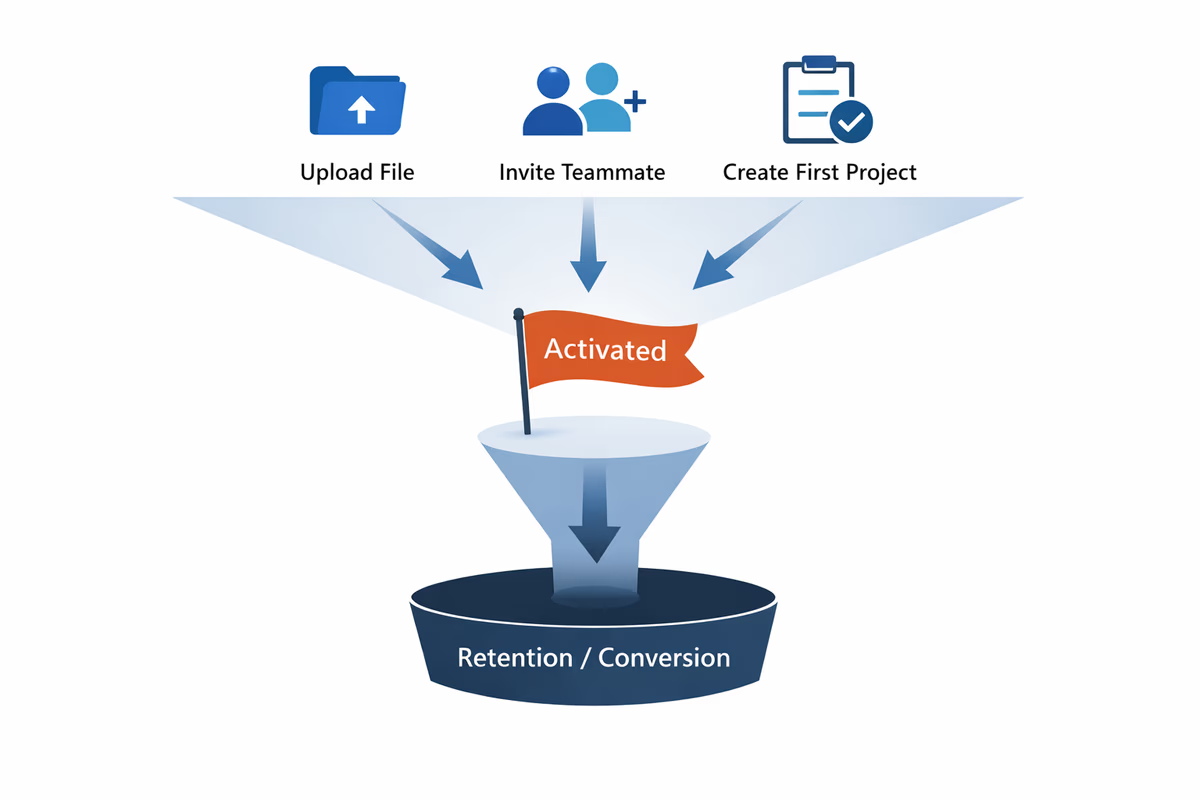
A lightweight tool tends to force a simpler question: What are the 1–3 actions that predict retention or conversion, and how do we guide users to them?
3) “More features” can mean less clarity
Bigger platforms encourage building more flows, more segments, more messages. The result is often:
- Conflicting guidance (users see too much, too soon)
- Higher maintenance (flows break as UI changes)
- Harder attribution (what actually moved activation?)
Lightweight onboarding keeps you focused on the few steps that matter.
4) ROI gets harder to prove
If onboarding becomes a complex program with many moving parts, measurement becomes murky:
- Multiple flows run simultaneously
- Different teams launch changes without a shared baseline
- Success metrics shift (adoption, engagement, NPS, retention)
Lightweight onboarding is easier to attribute because you can tie guidance directly to a defined activation event and compare cohorts.
Why lightweight onboarding outperforms: the activation advantage
Lightweight onboarding performs better when your primary goal is to improve activation and trial-to-paid conversion.
Faster time-to-value (TTV)
Users don’t need a “platform experience.” They need to accomplish something quickly.
Lightweight onboarding helps you:
- Reduce steps between signup and first outcome
- Provide contextual prompts only when needed
- Remove uncertainty (“What should I do next?”)
If your onboarding reduces TTV, you typically see downstream improvements in trial conversion and early retention.
Easier iteration (weekly, not quarterly)
The best onboarding is never “done.” It’s tuned.
With a lightweight setup, you can:
- Launch a new checklist in hours/days
- Update copy without engineering tickets
- Test different activation paths by persona
This is especially valuable in B2B SaaS where your product and ICP evolve continuously.
Better alignment with PLG reality
In product-led growth, your product is doing more of the selling. That means onboarding needs to:
- Highlight value, not features
- Encourage self-serve success
- Support multiple personas (admin vs end user)
Lightweight onboarding supports that by focusing on “next best action” guidance rather than trying to orchestrate every possible journey.
The hidden costs of complex adoption suites (a realistic checklist)
Before choosing a heavy platform, account for costs beyond the contract value:
- Maintenance load: flows and UI elements break as product UI changes
- Governance overhead: approvals, publishing workflows, brand reviews
- Data complexity: event naming, identity resolution, segmentation drift
- Training time: internal teams must learn a large toolset
- Noise risk: too many prompts reduce trust and increase dismissal
If you can’t commit to ongoing operational ownership, a complex suite often underperforms simply because it’s not maintained.
When a complex adoption platform does make sense
Lightweight doesn’t win in every scenario. Consider a heavier platform if you have most of the following:
- Multiple products or modules with significantly different user journeys
- Highly regulated environment requiring strict governance and audit trails
- Very large enterprise accounts needing role-based onboarding at scale
- Dedicated ops resources to run adoption as a program (not a side task)
- Mature instrumentation already in place (clean events, stable taxonomy)
If you’re still trying to define activation and stabilize onboarding flows, start lightweight first.
A practical rollout plan for lightweight onboarding (30 days)
Here’s a simple, execution-first plan to get results quickly.
Week 1: Define activation and the “happy path”
- Pick one activation milestone (not five). Examples:
- Invite a teammate
- Connect an integration
- Create first project/dashboard
- Publish first campaign
- Map the shortest path from signup to that milestone.
- Identify the top 3 drop-off points (where users stall or abandon).
Deliverable: a one-page onboarding map with 1 activation event and 3 friction points.
Week 2: Build guidance around the friction (not the UI)
Create only what you need to move users through the critical steps:
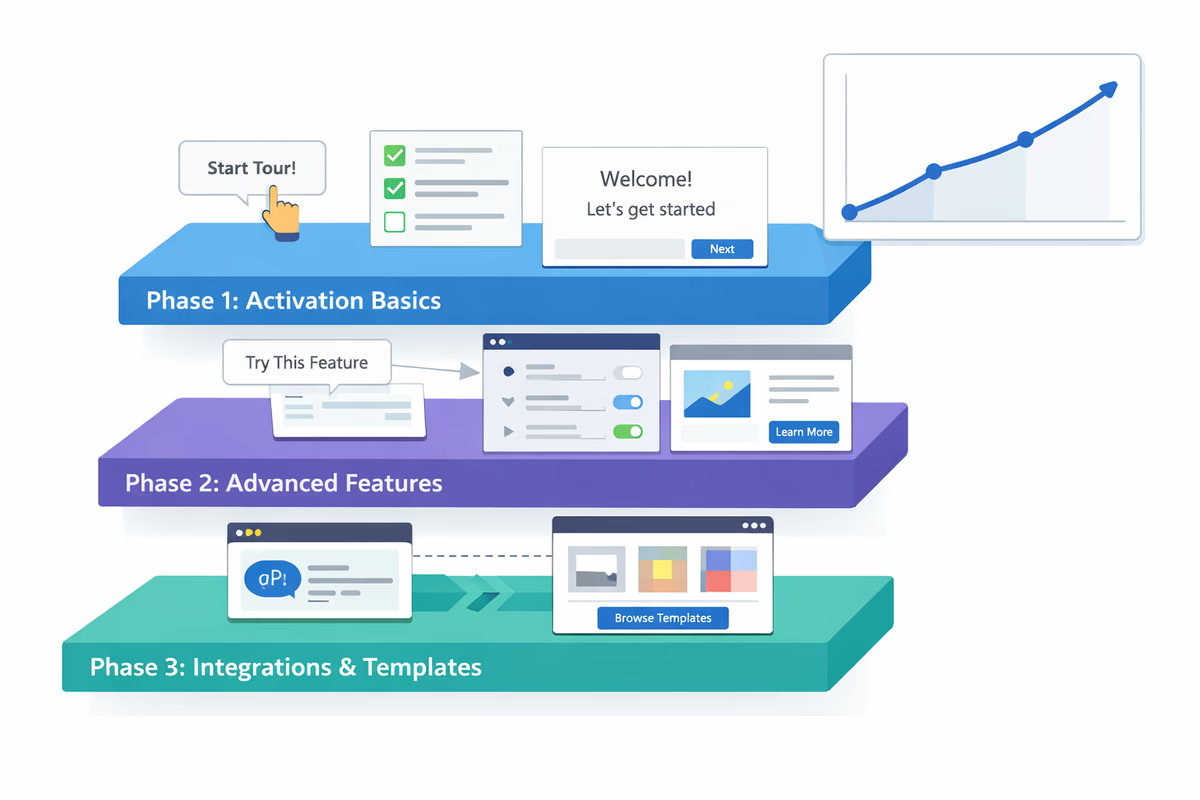
- A welcome modal that sets the outcome (“In 2 minutes you’ll have X set up”)
- A checklist with 3–5 items that mirror the happy path
- Tooltips that appear contextually at the friction points
Rule: if a step doesn’t support activation, don’t include it.
Week 3: Instrument and measure the minimum viable metrics
You don’t need a complex analytics setup to start. Track:
- Activation rate: % of new users who complete the activation event within X days
- Time-to-value: median time from signup to activation
- Step completion: checklist completion per step (to find the bottleneck)
If possible, compare cohorts:
- Users who saw onboarding guidance vs users who didn’t
- New onboarding version vs old version
Week 4: Iterate based on one bottleneck
Pick the biggest bottleneck and run one improvement cycle:
- Rewrite confusing copy
- Reduce steps
- Add a tooltip exactly where users hesitate
- Split onboarding by persona (admin vs member)
Avoid the trap of “adding more onboarding.” Your job is to remove friction.
What to optimize: activation beats “feature adoption” early on
A common mistake is optimizing onboarding for broad feature adoption too early.
Early onboarding should prioritize:
- One core value moment
- One repeatable workflow
- One reason to come back tomorrow
After activation improves, then expand to secondary adoption goals (advanced features, integrations, templates). Lightweight onboarding makes this progression easier because you can add guidance in layers without rebuilding a complex system.
Decision framework: lightweight vs complex (10 questions)
Use these questions to choose the right approach:
- Can we define activation in one sentence?
- Do we need results in weeks (not quarters)?
- Do we have a dedicated owner for onboarding optimization?
- Is our product UI changing frequently?
- Are we supporting multiple personas with different outcomes?
- Do we have clean event tracking today?
- Can we commit to maintaining dozens of flows long-term?
- Is governance/auditability a hard requirement?
- Will multiple teams publish in-product experiences?
- Are we optimizing for activation first, or enterprise enablement at scale?
If you answered “yes” to speed, clarity, and limited ownership, lightweight onboarding is usually the better starting point.
The bottom line
Complex adoption platforms aren’t “bad.” They’re just often mismatched to what most B2B SaaS teams need right now: faster activation, shorter time-to-value, and clear measurement.
Lightweight onboarding tools outperform when they help you ship guidance quickly, focus on the few actions that predict retention, and iterate without turning onboarding into a long implementation program. Start simple, measure activation, and earn the right to add complexity only when the business truly needs it.
FAQ
What’s the biggest advantage of lightweight onboarding tools?
Speed to impact. Lightweight onboarding tools let you build and update in-app guidance quickly, so you can reduce time-to-value and improve activation without a long implementation cycle or heavy operational overhead.
How do you measure ROI from onboarding improvements?
Tie onboarding to one activation milestone and measure changes in activation rate and time-to-value. If you run cohort comparisons (exposed vs not exposed, or before vs after), you can attribute improvements more confidently and connect them to trial conversion or early retention.
When should a company choose a complex adoption platform instead?
Choose a complex platform when you have multiple products or highly segmented enterprise journeys, strict governance requirements, mature instrumentation, and a dedicated team to manage onboarding as an ongoing program.
What should an onboarding checklist include?
Only steps that move users toward activation. Keep it to 3–5 items that reflect the shortest path to the first meaningful outcome, and use step completion data to identify where users are getting stuck.
Table of Contents
- What “lightweight onboarding” actually means
- Why complex adoption platforms often slow teams down
- 1) Implementation becomes the project (instead of activation)
- 2) Ownership gets diluted
- 3) “More features” can mean less clarity
- 4) ROI gets harder to prove
- Why lightweight onboarding outperforms: the activation advantage
- Faster time-to-value (TTV)
- Easier iteration (weekly, not quarterly)
- Better alignment with PLG reality
- The hidden costs of complex adoption suites (a realistic checklist)
- When a complex adoption platform *does* make sense
- A practical rollout plan for lightweight onboarding (30 days)
- Week 1: Define activation and the “happy path”
- Week 2: Build guidance around the friction (not the UI)
- Week 3: Instrument and measure the minimum viable metrics
- Week 4: Iterate based on one bottleneck
- What to optimize: activation beats “feature adoption” early on
- Decision framework: lightweight vs complex (10 questions)
- The bottom line