

Why Activation Matters More Than Acquisition in B2B SaaS
Acquisition gets users in the door. Activation turns them into customers. Learn why first-session confusion is the silent conversion killer, how to define your activation moment, and what to change in onboarding to lift trial-to-paid conversion without increasing ad spend.
 Emma C.Head of Growth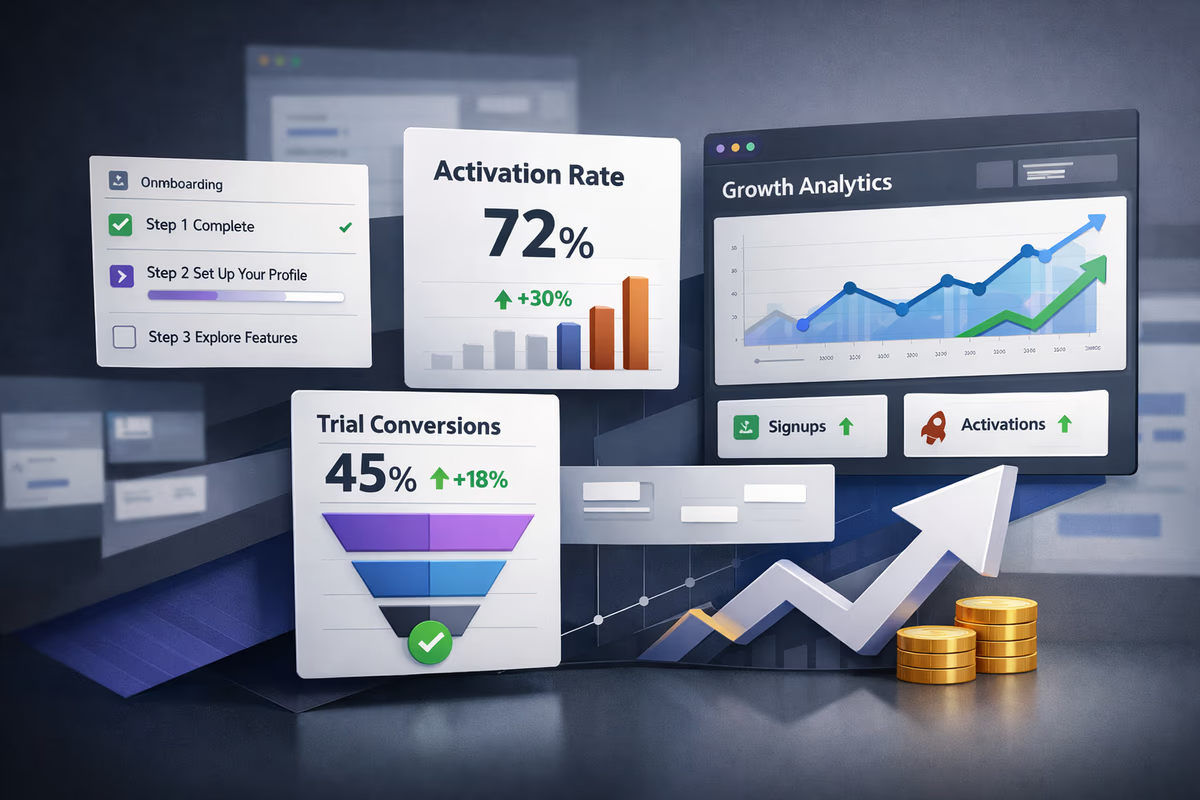
Acquisition is the easiest growth lever to pull in B2B SaaS because it’s visible: more spend, more clicks, more signups, more demos. Activation is harder because it requires product clarity, onboarding discipline, and cross-team alignment.
But in most SaaS businesses, activation is the real constraint.
If users don’t reach their first value moment quickly, every acquisition channel becomes more expensive, sales cycles get longer, and retention never stabilizes. You can’t out-market a confusing first session.
Acquisition creates volume. Activation creates revenue.
Think of acquisition as getting someone to walk into your store. Activation is helping them find what they came for and use it successfully.
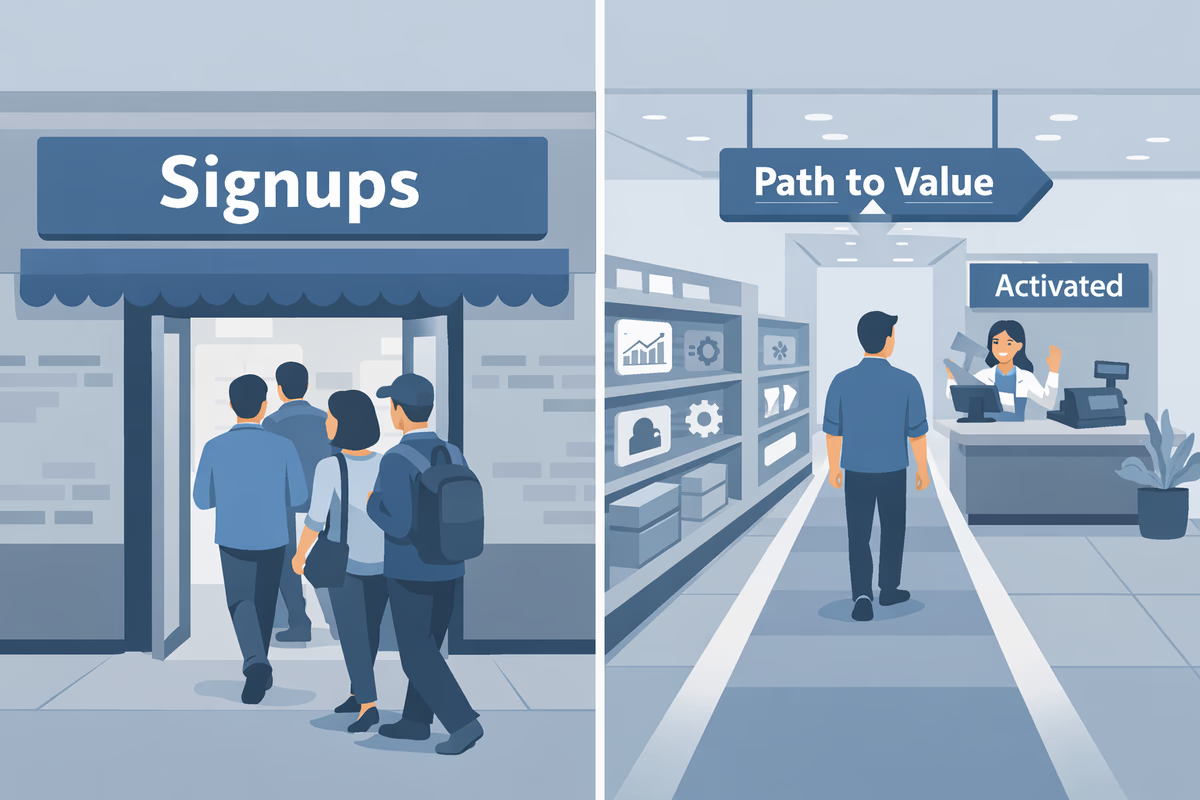
In B2B SaaS, that difference is brutal because:
- Buyers are risk-averse. If the product feels unclear in the first session, they assume implementation will be worse.
- Trials are short. Users don’t have time to “figure it out later.”
- Multiple stakeholders are involved. If the first user can’t show value to their team quickly, momentum dies.
The hidden math: why activation multiplies everything
Activation affects:
- Trial-to-paid conversion: Users who reach value are the only ones who can justify paying.
- Sales efficiency: Activated users ask better questions and need less hand-holding.
- Retention: The behaviors that define activation often become the behaviors that drive renewal.
- Acquisition CAC: Better activation improves downstream conversion, which lowers effective CAC across channels.
If you improve activation by 20%, you don’t just get 20% more customers. You get more revenue per signup, more expansion potential, and a healthier funnel.
What “activation” actually means (and what it doesn’t)
Activation is not:
- Creating an account
- Clicking around the dashboard
- Completing a generic product tour
- Watching a welcome video
Activation is: the user reaching a meaningful outcome that proves your product can solve their problem.
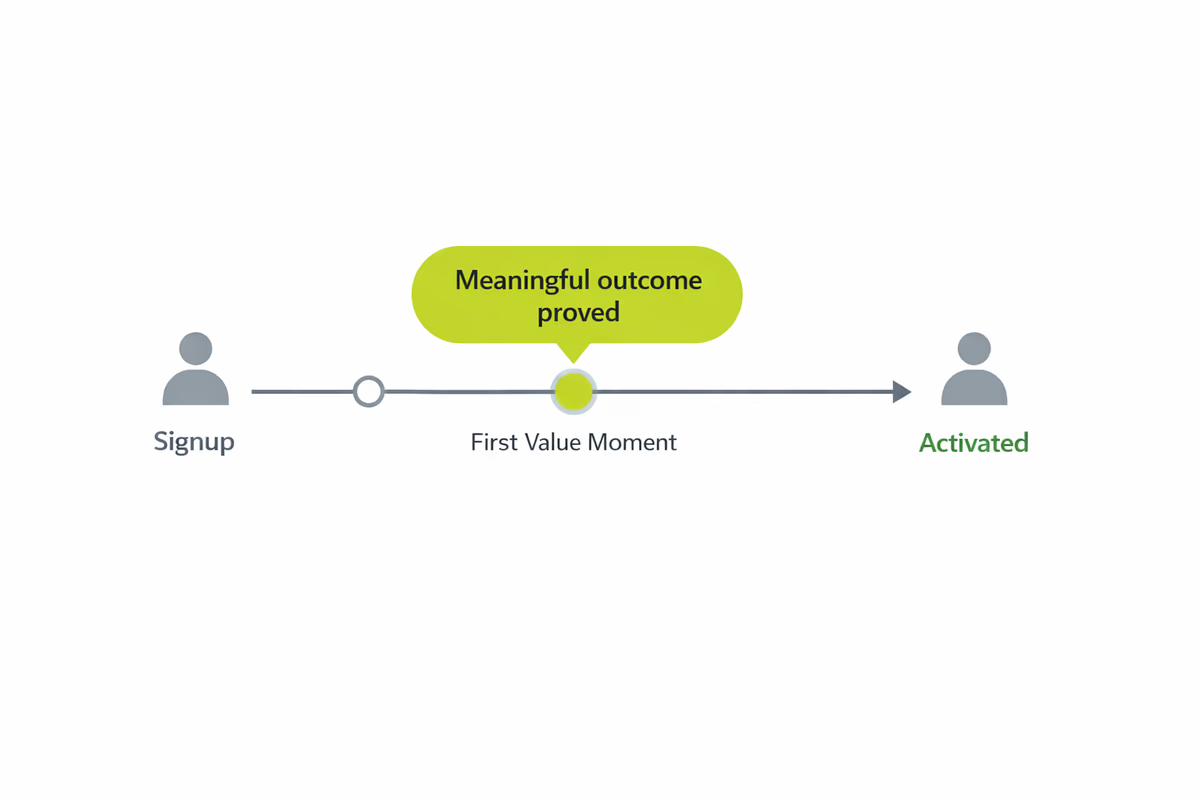
Define your activation moment (practical framework)
A good activation event has three traits:
- Value-linked: It correlates strongly with conversion and retention.
- Early: It can happen in the first session or first day for most users.
- User-controlled: The user can complete it without waiting on support.
Examples (these vary by product):
- CRM: import contacts + create first pipeline stage
- Analytics: connect data source + see first report
- Project management: create project + invite teammate + assign first task
- Security tool: install agent + detect first event
If your “activation” is something like “visited 5 pages,” you’re measuring activity, not value.
First-session confusion is the silent conversion killer
Most drop-off doesn’t happen because users dislike your product. It happens because they hit uncertainty:
- “What should I do first?”
- “Is this the right setup for my use case?”
- “Do I need to integrate something before I can see value?”
- “Am I doing this correctly?”
In B2B SaaS, confusion is expensive because it triggers two outcomes:
- Passive abandonment: The user closes the tab and never comes back.
- Support dependency: The user waits for help, extending time-to-value beyond the trial window.
Where confusion usually shows up
Look for these common friction points:
- Too many onboarding choices (no clear “happy path”)
- Empty states that don’t tell users what to do next
- Setup steps that require data, permissions, or teammates without explaining why
- Feature-first tours that explain UI instead of outcomes
- Jargon that assumes domain knowledge
If users can’t answer “what’s next?” in the first 60 seconds, activation will suffer.
Why activation is the real growth lever (especially in B2B)
B2B SaaS growth is constrained by trust and proof.
Acquisition can generate interest, but activation creates evidence. The first value moment is often the first time a user believes:
- “This will work for us.”
- “This is worth paying for.”
- “I can roll this out to my team.”
That belief is what moves accounts from trial to paid and from individual usage to adoption.
Activation also reduces sales and CS load
When onboarding is unclear, sales and customer success teams become the workaround. That doesn’t scale.
A strong activation path:
- reduces “how do I start?” tickets
- shortens implementation conversations
- improves demo quality (prospects can self-educate)
- lets CS focus on expansion instead of basic setup
How to improve activation: a step-by-step playbook
You don’t fix activation by adding more content. You fix it by designing a path to value and guiding users through it.
1) Map the shortest path to first value
Start with your best-fit customers (not all users). For that segment, list:
- The outcome they want in week 1
- The minimum steps required to reach it
- The data/integrations needed
- The “proof” moment (what they see that confirms value)
Then ruthlessly remove steps that aren’t required for that first proof.
If a step is necessary but heavy (like an integration), consider a lightweight alternative (sample data, sandbox mode, or partial setup) to demonstrate value sooner.
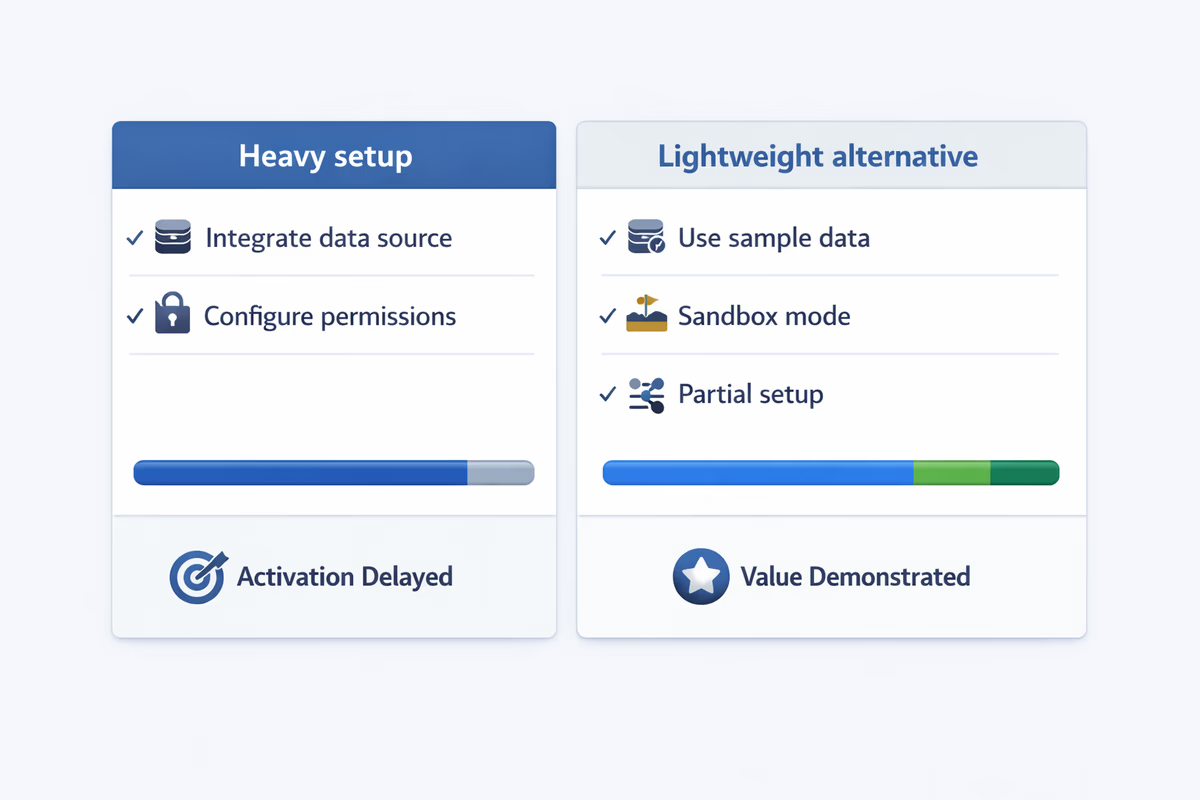
2) Turn that path into a guided first-session experience
A good first session feels like:
- one clear starting point
- a few sequential steps
- immediate feedback after each step
- a visible finish line
Use in-app guidance to reduce uncertainty:
- Welcome screen with one primary action based on role or goal
- Checklists that show progress and keep users oriented
- Contextual tooltips only at decision points (not everywhere)
- Empty states that teach by doing (templates, examples, “create your first…”)
The goal is not to “tour the product.” The goal is to get the user to a result.
3) Personalize onboarding by job-to-be-done
B2B products serve multiple roles. A single onboarding path usually fails because it’s irrelevant to someone.
At minimum, segment by:
- role (e.g., admin vs contributor)
- use case (e.g., reporting vs automation)
- company size (SMB vs mid-market)
Then tailor:
- the checklist steps
- templates and defaults
- the first report/dashboard/project created
Personalization doesn’t need to be complex. Even one question (“What are you trying to do?”) can dramatically improve relevance.
4) Instrument activation and diagnose drop-offs
You can’t improve what you can’t see.
Track:
- Activation rate: % of new accounts that reach the activation event within a defined window
- Time-to-value (TTV): time from signup to activation
- Step conversion: completion rate of each onboarding step
- First-session abandonment: where users exit or stall
Then do a simple drop-off review weekly:
- Identify the top 1–2 steps with the biggest losses
- Watch a handful of session replays (or review events) for context
- Fix the highest-impact friction first (copy, UX, defaults, missing guidance)
5) Build “activation nudges” for users who stall
Not everyone activates in one session. For stalled users, trigger nudges that bring them back to the next step:
- email with a single action (“Connect your data source to see your first report”)
- in-app reminder banner that resumes the checklist
- contextual prompt when they return to an empty state
Keep nudges specific, short, and tied to the next value step.
What to prioritize this quarter (a realistic activation roadmap)
If you want an activation lift without a giant rebuild, focus on these three deliverables:
1) A clear activation definition + dashboard
- one activation event per core use case
- activation rate and TTV tracked weekly
- segment results by acquisition channel and persona
2) A guided onboarding path to first value
- role/use-case selection (optional but recommended)
- checklist with 3–7 steps max
- improved empty states with templates/examples
3) One experiment per month on the biggest drop-off
Examples:
- reduce required fields in setup
- add a template as the default first project
- move an integration step later
- rewrite confusing microcopy
Small changes compound when they remove uncertainty.
Where User Tourly fits in an activation-first strategy
Activation improves when users always know:
- what to do next
- why it matters
- how close they are to value
User Tourly helps teams implement that guidance quickly with onboarding checklists, product tours that are outcome-driven (not feature dumps), and contextual prompts that show up at the right moment.
The best use of in-app guidance isn’t adding more UI. It’s removing confusion and shortening time-to-value.
The takeaway
If acquisition is your only growth lever, you’ll keep paying more for the same results.
Activation is the leverage point because it turns signups into customers and customers into retained accounts. Fix the first-session experience, guide users to a real value moment, and measure activation like a core revenue metric.
Do that, and acquisition becomes easier because your product starts doing more of the selling.
FAQ
What is a good activation metric for B2B SaaS?
A good activation metric is a user action (or small set of actions) that strongly predicts conversion and retention and can happen early. Examples include connecting a data source and viewing the first report, creating the first project and assigning a task, or inviting a teammate and completing a first workflow. Avoid vanity metrics like page views or time in app.
How do you reduce time-to-value in a free trial?
Reduce time-to-value by mapping the shortest path to the first meaningful outcome, removing non-essential steps, using templates or sample data to demonstrate value fast, and adding in-app guidance (checklists, contextual prompts, and strong empty states) so users always know what to do next.
Why does first-session onboarding impact trial-to-paid conversion so much?
Because the first session is where users decide whether the product feels understandable and capable. If they hit uncertainty or can’t reach a proof-of-value moment quickly, they abandon the trial or delay setup until it’s too late. A guided first session reduces confusion and gets users to a result they can justify paying for.
Should activation be owned by marketing, product, or customer success?
Activation should be a shared metric with clear ownership for execution. Product typically owns the in-app experience and instrumentation, marketing supports with lifecycle messaging and positioning, and customer success provides feedback on where users get stuck. One team should own the activation KPI and the experimentation cadence to avoid diffusion of responsibility.
Table of Contents
- Acquisition creates volume. Activation creates revenue.
- The hidden math: why activation multiplies everything
- What “activation” actually means (and what it doesn’t)
- Define your activation moment (practical framework)
- First-session confusion is the silent conversion killer
- Where confusion usually shows up
- Why activation is the real growth lever (especially in B2B)
- Activation also reduces sales and CS load
- How to improve activation: a step-by-step playbook
- 1) Map the shortest path to first value
- 2) Turn that path into a guided first-session experience
- 3) Personalize onboarding by job-to-be-done
- 4) Instrument activation and diagnose drop-offs
- 5) Build “activation nudges” for users who stall
- What to prioritize this quarter (a realistic activation roadmap)
- 1) A clear activation definition + dashboard
- 2) A guided onboarding path to first value
- 3) One experiment per month on the biggest drop-off
- Where User Tourly fits in an activation-first strategy
- The takeaway